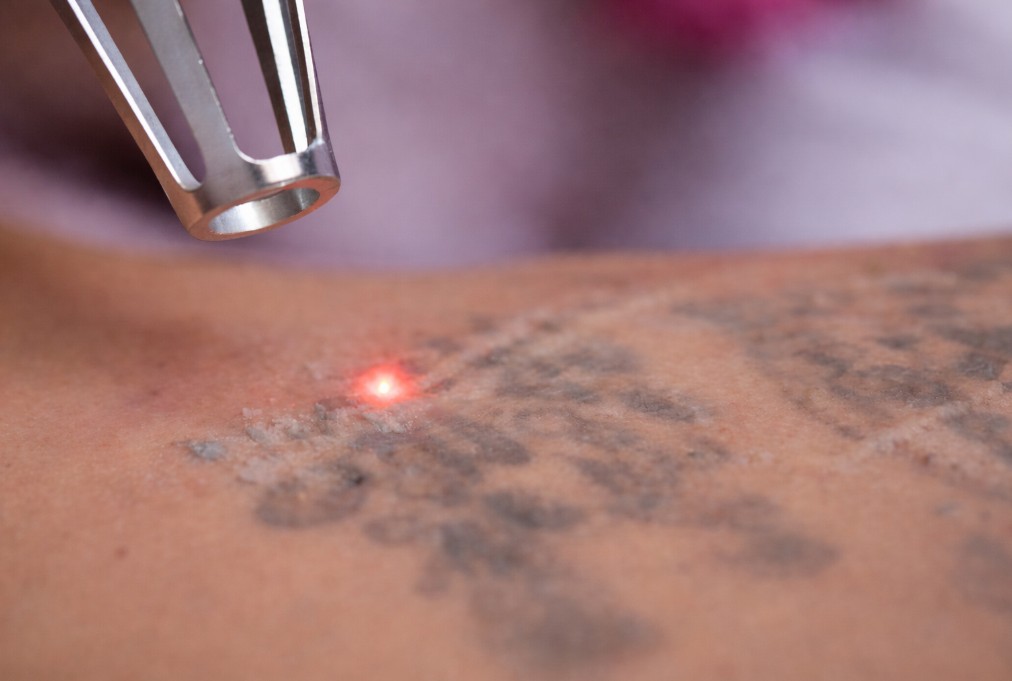
Laser tattoo removal is an increasingly requested medical-aesthetic procedure, but one of patients’ main concerns remains pain during sessions. Pain intensity is not uniform and depends on multiple factors, including the tattoo’s anatomical location, the nerve density of the area (or “sensitivity”), skin thickness, proximity to bone, and the patient’s individual tolerance.
Understanding how pain varies by body area helps set realistic expectations and plan treatment appropriately.
From a medical standpoint, pain during laser tattoo removal is usually described as a brief thermal and mechanical stimulus, comparable to the repeated impact of small thermal shocks on the skin. Other patients describe it as quick pinpricks, small elastic snaps, or an intense, localized heat sensation that stops immediately after each pulse.
In general terms, most patients rate the pain level as moderate to high, although there is some interindividual variability. Factors such as the laser wavelength, the fluence used, spot size, tattoo size, number of previous sessions, and/or the use of topical anesthesia directly influence the perceived pain threshold.
The rib area and the side of the torso tend to be highly sensitive during tattoo removal due to minimal fat coverage and the proximity of the rib cage bones. In addition, the skin in this area is thin and highly innervated, which amplifies the perception of the laser stimulus. Patients often describe these areas as especially painful, frequently requiring topical anesthesia beforehand to improve tolerance somewhat, although it cannot eliminate pain completely.
Wrists and ankles contain a high number of nerve endings and lack a significant fat layer to cushion the laser impact. The proximity of tendons and bones makes pain more intense compared to other body areas, making these some of the most sensitive locations.
The top of the foot and the fingers and toes are among the most sensitive areas for tattoo removal. These regions have very thin skin, little subcutaneous protection, and dense sensory innervation, which explains the high pain perception during sessions—even with state-of-the-art laser technology combined with skin-cooling systems.
The neck and collarbone region combine several factors that increase pain intensity: thin skin, proximity to bone, vessels and nerves, and little anatomical cushioning. In addition, this area’s natural hypersensitivity means the laser stimulus is perceived more strongly, so it often requires specific pain management.
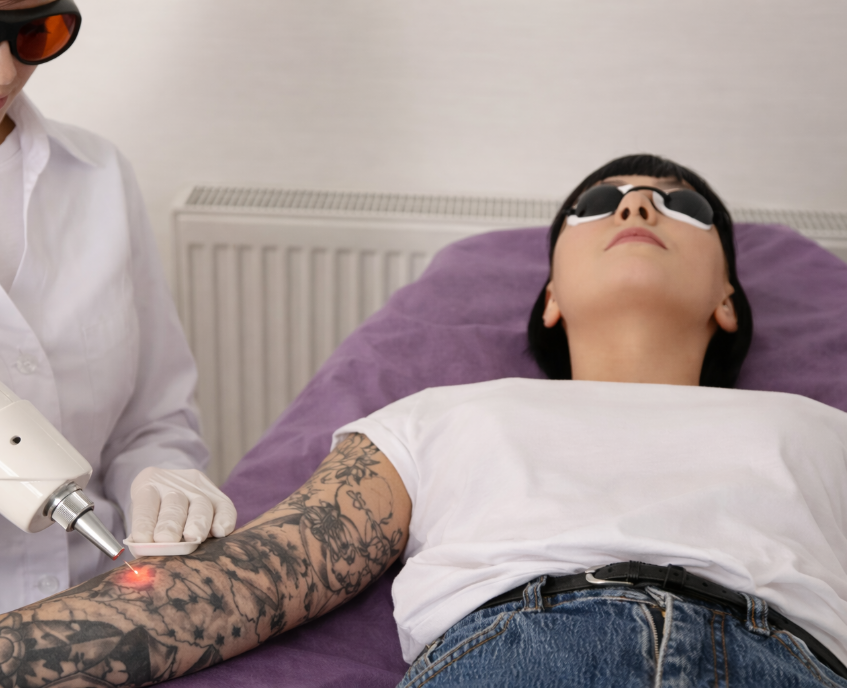
The upper back and shoulders have an intermediate pain tolerance during tattoo removal. Although the skin is relatively resilient, some spots are more sensitive depending on proximity to the spine or the shoulder joint. In general, patients experience moderate discomfort that is usually manageable.
Forearms and the outer arms are generally more favorable in terms of comfort. The skin is thicker and there is more subcutaneous tissue, which helps distribute the laser stimulus. Even so, pain can vary depending on tattoo size and pigment depth.
Calves fall into the medium-pain category. While muscle mass helps cushion the laser’s thermal energy, sensitivity can increase in areas closer to the Achilles tendon or the back of the leg, where the skin is somewhat thinner.
The thigh is one of the best-tolerated locations for laser tattoo removal. Its abundant muscle and fat tissue act as a natural buffer to the thermal stimulus, resulting in a lower pain perception compared to other areas.
The buttock region is characterized by low sensitivity during treatment due to thicker skin and subcutaneous tissue. Most patients describe sessions in this area as only mildly uncomfortable, even without additional analgesic measures.
The abdomen usually tolerates laser treatment well, as long as the tattoo is not very close to the rib margin or the navel. Skin elasticity and the presence of fat tissue contribute to a less painful experience for most patients.
From a medical perspective, pain is an inseparable part of laser tattoo removal. The use of high-strength topical anesthesia, skin cooling during laser pulses, and individualized technical settings have not made it possible to significantly relieve pain in highly sensitive areas.
That is why Sedalux, as pain-treatment specialists, has developed a specific approach that completely eliminates pain during tattoo removal, permanently changing the experience.
How do we do it? The professional experience behind our work, the choice of the most advanced laser technology, and a correct, individualized assessment of the patient and their skin are the key factors to achieve an effective, safe procedure with maximum comfort.
Now you can finally remove that tattoo from another era that no longer connects with you—and rewrite your skin’s story without fear of pain or suffering.
First outpatient anesthesia service outside the hospital setting.
We transport the safety and tranquility of the operating room to your home, or wherever you want.
CON EL AVAL DE:





SEDALUX | Anesthesia Services | Legal Notice | Privacy Policy | Cookies Policy