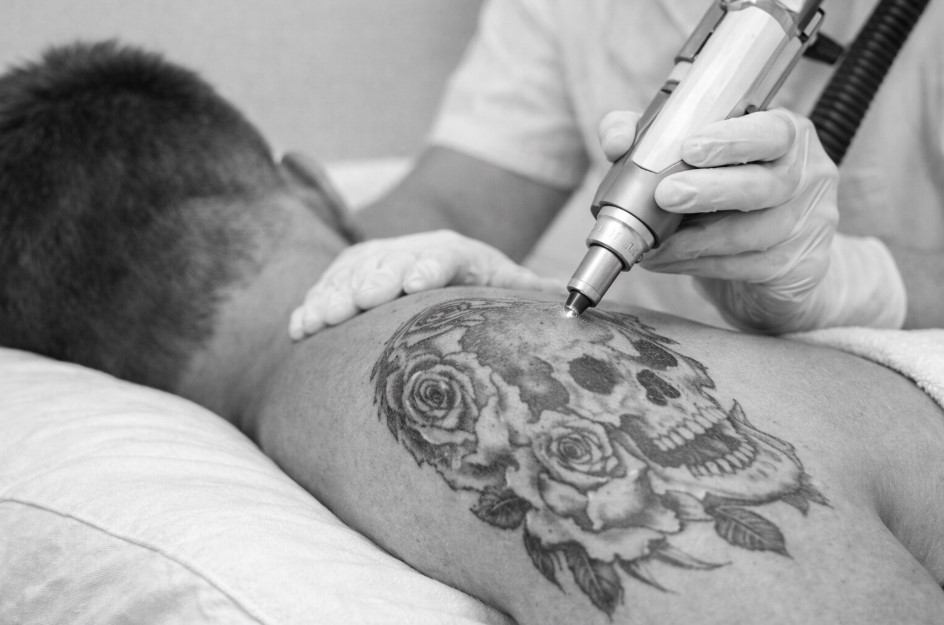
Laser tattoo removal is an increasingly sought-after medical-aesthetic procedure in clinical practice. However, one of the main barriers for patients is still the discomfort associated with treatment. Understanding how the process works, which factors influence painful sensation, and what level of pain is to be expected makes it possible to approach tattoo removal in a more informed, realistic way—without fears or unfounded concerns caused by lack of knowledge.
Tattoos are created by the deposition of insoluble pigments in the dermis, which prevents spontaneous elimination and limits effective therapeutic options. Over time, different removal methods have been described, although in current clinical practice, medical laser treatment is the gold standard and method of choice. Techniques such as depigmenting creams do not reach the deeper layers of the skin where the pigment is located and therefore do not allow true tattoo removal. Other invasive methods, such as dermabrasion or surgical excision, have become restricted due to their high pain levels, greater risk of scarring, and unpredictable aesthetic outcomes.
Laser removal acts selectively on the pigment through a photoacoustic phenomenon, fragmenting it into particles small enough for the immune system to eliminate over time, progressively. This approach allows the tattoo to be removed little by little, always preserving the integrity of the surrounding non-tattooed skin and providing precise control over the degree of injury.
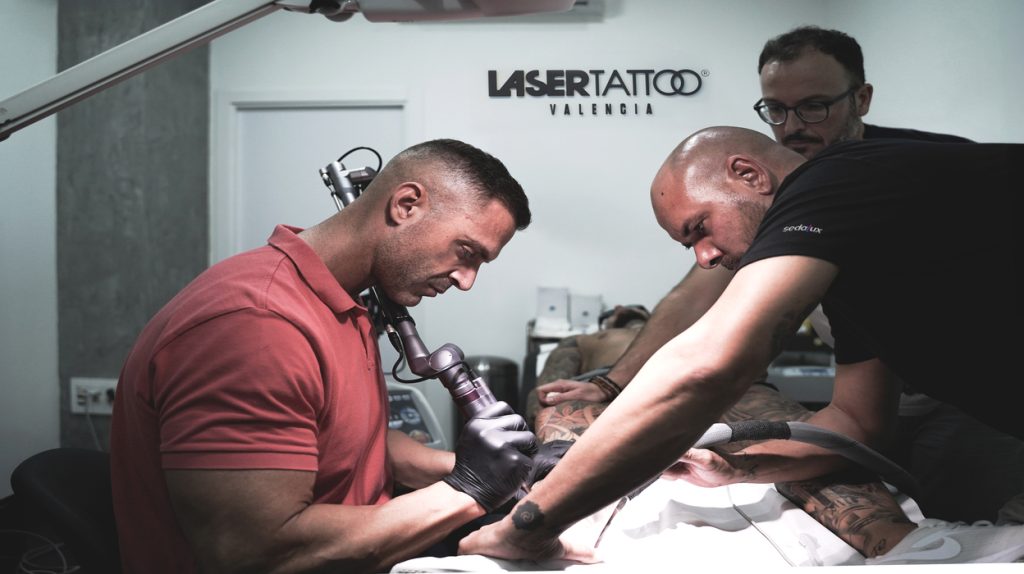
Laser tattoo removal usually causes pain during treatment, although in most cases it is a more or less tolerable sensation and short-lived. The painful stimulus is produced mainly by the laser’s energy release on the pigment and by transient heating of the skin tissue. Clinically, patients often describe it as quick pinpricks, small elastic snaps, or an intense, localized heat sensation that stops immediately after each pulse.
It is important to note that current technology has significantly reduced procedure-related pain thanks to a combination of factors such as the use of skin cooling systems and the limited duration of sessions, which prevents prolonged exposure to the painful stimulus. In most situations, especially with small tattoos, fear of pain is greater than the actual pain experienced; but in other cases, we must adapt individualized protocols for each patient and their tattoo in order to guarantee a painless experience, as they do at Lasertattoo.
Medical literature agrees that pain during tattoo removal is variable, temporary, and dependent on the anatomical location, as well as the fluence used and the type of laser.
These criteria are widely described in dermatology, aesthetic medicine, and photomedicine texts, and apply broadly to many medical-aesthetic procedures—not only tattoo removal.
Various studies published in journals such as the Journal of the American Academy of Dermatology (Gold MH, et al. Laser tattoo removal: a clinical update. 2012) agree that the anatomical location of the tattoo is one of the factors that most influences pain perception. Dermal thickness, the presence of more or less subcutaneous adipose tissue, a high density of nerve endings, or proximity to bony structures often lead to a greater tissue response to the laser’s thermal stimulus. By contrast, regions with thicker skin and more adipose tissue tend to tolerate laser application better. As a result, the most sensitive areas are usually: ribs, ankles, insteps, neck, and collarbone; and the more tolerable areas: arms, shoulders, thighs, and back.
The type of laser used, as well as its technical parameters, has a direct impact on pain level.
Latest-generation laser devices can act more selectively on the pigment, reducing thermal dispersion in the skin and therefore, “by generating less heat, the painful sensation is lower.” In contrast, older or poorly calibrated systems increase discomfort and the risk of skin injury.
In addition, the practitioner’s experience and advanced knowledge of correctly tailoring and parameterizing treatment to the skin’s needs are essential to minimize discomfort and prevent adverse effects.
At Sedalux, because we know that professional expertise and the technology used make all the difference, that is why we work exclusively with Lasertattoo.
Tattoo size affects session duration and, consequently, prolonged exposure to the painful stimulus—which is always associated with a poor experience. On the other hand, pigment color also influences laser response: darker tones (black) absorb energy better and typically require less energy or fewer sessions (so they respond better), while lighter colors (greens) may need more energy or other specific adjustments that influence pain perception. So, the largest tattoo is not always the most painful.
Baseline skin condition, hydration, the presence of prior inflammation, scars, or skin alterations, as well as individual pain sensitivity, are determining factors. Variables such as personal pain threshold, anxiety levels during the procedure, or even fatigue can notably influence and significantly change the experience from one session to another, even if the procedure is technically identical.
From a medical standpoint, until now it was not possible to guarantee completely painless tattoo removal, so the objective had always been to “endure pain,” making treatment as comfortable and affordable as possible.
However, today it is possible to remove a tattoo without any pain by combining the most advanced laser technology with a fully developed, skin-specific anesthetic treatment designed and adapted by Sedalux. The goal of the treatment is not only to eliminate any painful sensation, but to ensure the procedure is safe and controlled—allowing the laser fluence to be optimized as much as possible in order to increase the effectiveness of each session and thus reduce the total number of sessions needed to complete the tattoo removal process.
If you are thinking about getting your skin back, get well informed, trust the best specialists in the field, and leave fear behind. Today, removing a tattoo is more accessible, safer, and more manageable than ever.
First outpatient anesthesia service outside the hospital setting.
We transport the safety and tranquility of the operating room to your home, or wherever you want.
CON EL AVAL DE:





SEDALUX | Anesthesia Services | Legal Notice | Privacy Policy | Cookies Policy